Quick answer: You likely need an emergency dentist the same day if you have uncontrolled bleeding, facial swelling, fever with tooth pain, a knocked-out or displaced tooth, severe pain that won’t respond to over-the-counter medicine, or a broken tooth with sharp edges. Minor sensitivity, a small chip, or a lost filling without pain can often wait a short time, but call for guidance.
Signs You Should Be Seen Today
Some dental problems are time-sensitive because infection and trauma can worsen quickly. Call for same-day care if you have swelling in the face or gums, trouble swallowing, a fever with tooth pain, pus or a bad taste that suggests drainage, or bleeding that doesn’t slow down with steady pressure. A tooth that’s been knocked out, pushed out of position, or cracked down into the gum also needs urgent attention.
If you’re unsure, treat it like an emergency and get screened by a watkinsville ga emergency dentist—it’s far easier to calm an early infection or stabilize a fracture than to fix complications later. Pain that wakes you up, spikes when you bite, or radiates to the ear or jaw is another strong “don’t wait” sign.
Call now vs schedule
Call a dentist now: swelling with fever, facial swelling, severe pain that keeps escalating, a knocked-out/loose/displaced tooth, or a broken tooth with sharp edges.
Go to the ER now: trouble breathing or swallowing, rapidly spreading swelling under the jaw/neck, uncontrolled bleeding, or signs of a severe allergic reaction.
Schedule soon/monitor: small chip with no pain, mild sensitivity that fades quickly, or a lost filling/crown without sharp pain (avoid chewing there and book the next available visit).
Go to an ER (not just a dental office) if you have trouble breathing, rapidly spreading swelling under the jaw or into the neck, or signs of a serious allergic reaction. Those symptoms can be medical emergencies.
What You Can Do Right Now at Home
For toothache, rinse gently with warm salt water and use a cold pack on the cheek in 10–15 minute intervals. Many people can use ibuprofen or acetaminophen as directed on the label; avoid doubling up or exceeding the maximum daily dose. Skip placing aspirin directly on the gums—it can burn tissue.
If a tooth is knocked out, handle it by the crown (not the root), rinse briefly with clean water if dirty, and try to place it back in the socket. If that’s not possible, store it in milk or saliva and get help fast; dental groups such as the American Dental Association advise immediate action—ideally as soon as possible (often within the first hour).
For a broken tooth, save any pieces, rinse your mouth, and cover sharp edges with dental wax (or sugar-free gum in a pinch). If a crown comes off, keep it and avoid chewing on that side.
Watkinsville Logistics: What to Have Ready When You Call
Most emergency dental offices that serve Watkinsville also see patients from nearby Oconee County and surrounding communities, so it helps to confirm location and appointment options during the first phone call. If you’re calling from outside Watkinsville, mention your current location and how far you can travel so the team can suggest the quickest realistic plan.
Have a few details ready: when the problem started, whether there’s swelling or fever, any injury/trauma, what makes pain worse (cold, heat, biting), medications you’ve taken (and when), allergies, medical conditions, and whether you’re pregnant or on blood thinners. If you can, take clear photos of swelling or a broken tooth; many offices can use that information to triage faster.
If it’s after hours, follow the office’s voicemail or website instructions for urgent guidance, and don’t wait at home with red-flag symptoms. For breathing or swallowing problems, rapidly spreading swelling, or uncontrolled bleeding, go to the nearest emergency room.
What to Expect From an Emergency Dental Visit
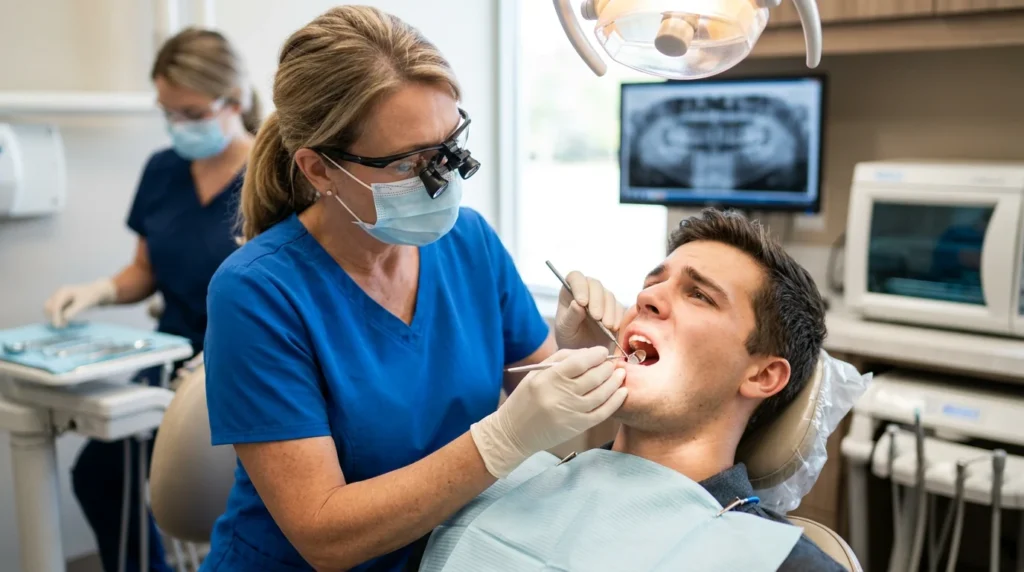
Emergency dental care usually focuses on diagnosis and stabilization first. Expect questions about the timeline, what triggers the pain (cold, heat, biting), and any swelling or fever. Many visits include X-rays to look for decay near the nerve, an abscess, a root fracture, or bone involvement.
Treatment may be aimed at getting you comfortable and safe the same day: draining an infection, placing a temporary filling, smoothing a sharp edge, re-cementing a crown, splinting a loose tooth, or prescribing medication when appropriate. A follow-up appointment is common for definitive care such as a root canal or a permanent restoration.
If you’re deciding what to do next, call a local dentist for triage and appointment options, and go to the ER for breathing/airway issues, rapidly spreading swelling, or uncontrolled bleeding. TLC Dental Wellness can also help you triage symptoms and arrange appropriate care.