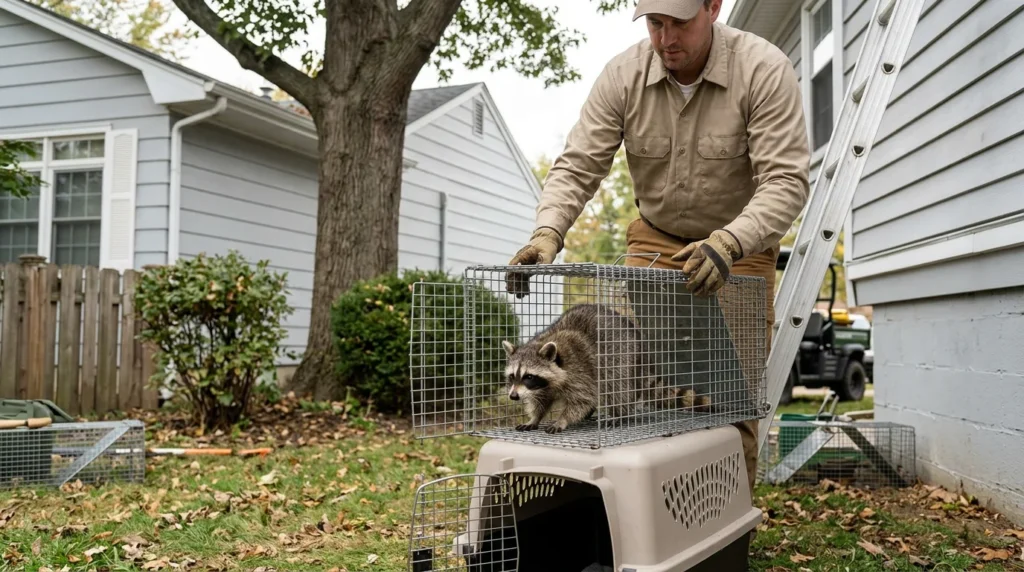
Quick answer: Wildlife removal typically starts with identifying the animal, locating entry points, and checking for nesting or dependent young. A pro then uses a species-appropriate approach such as trapping or one-way exclusion, confirms the animal is out, and seals access points to prevent re-entry. Cleanup and odor control may follow. The exact methods and timing can vary by species, season, and Georgia regulations.
What To Expect From A Typical Visit
A standard appointment starts with an inspection of the attic, crawl space, roofline, vents, and any areas with droppings, scratching sounds, or odor. The goal is to confirm the species (squirrels, raccoons, opossums, bats, or rodents are common around Athens) and map how it got in—commonly a gap at the roof edge, a damaged soffit, a loose vent screen, or an opening at a crawl-space door.
After identification, the technician chooses a method that fits the animal and the structure. Good wildlife removal includes checking for dependent young, because removing an adult while babies remain can create odor problems and a bigger mess inside walls or attics. You should also expect clear guidance on what you should not do between visits, so you don’t accidentally trap an animal inside.
Concrete examples help set expectations: a roof-edge gap with fresh chewing and daytime attic activity that matches squirrels can lead to a one-way door or exclusion device, then timed sealing after exit is confirmed. A torn crawl-space vent screen with muddy tracks and latrine-style droppings can lead to trapping and then screening and barrier repairs. A strong odor near a ceiling spot with flies or staining can lead to locating and removing a carcass, followed by sanitation and sealing the access route that likely allowed entry.
Simple Timeline: What Happens Across Visits
Many jobs follow a short sequence rather than a single visit, though the exact schedule can vary with weather, access, and the animal’s activity pattern. Visit 1 is typically inspection and setup: confirm species, locate entry points, check for young, and place traps or install an exclusion device where appropriate.
Visit 2 is typically confirmation and removal: verify activity has stopped, remove captured animals if trapping is used, adjust equipment if needed, and confirm the main entry is no longer being used. Visit 3 is typically exclusion and finish work: seal or reinforce entry points, repair screens or gaps, and handle cleanup or deodorizing if contamination is present. Some situations take fewer or more visits depending on what’s found.
Athens And Georgia Specifics: Species, Season, And Rules
In Athens and across Georgia, what’s appropriate can change by species and season. Squirrels commonly use rooflines and attic vents; exclusion work is usually planned around their daily exit/return pattern and any nesting activity. Raccoons can den in attics or crawl spaces and may require a different trapping strategy and more robust repairs because they can pull and pry at weak spots. Bats are a special case: exclusion timing and methods are more restrictive, and professionals generally avoid approaches that could trap bats inside living spaces.
Season also matters because dependent young can be present for many species at certain times of year. That can change the sequence—sometimes focusing first on confirming whether young are present, then choosing a method that prevents separation and avoids creating odor issues. Methods should follow Georgia Department of Natural Resources (DNR) rules and other applicable regulations, so a good plan won’t be one-size-fits-all.
Homeowner Action Checklist: Safety Steps And When To Call Urgently
Do now: keep people and pets away from the suspected entry area, and close interior doors to limit access to living spaces. If you can do so safely, take photos from the ground of roof edges, vents, or crawl-space openings, and note the time of day you hear activity. Secure trash, bring pet food indoors, and trim back easy “bridge” access like low branches touching the roofline.
Don’t do this: don’t seal an active hole until you’re sure the animal is out, because that can trap it inside walls or attics. Don’t handle droppings, nesting material, or contaminated insulation without gloves and respiratory protection; sweeping or vacuuming can stir up particles. Don’t try to corner or grab wildlife—bites and scratches are a real risk, and stressed animals can act unpredictably.
Call urgently if: you find a bat in a living space, you smell a strong odor that suggests a carcass (especially with flies or staining), you see a raccoon active in daytime or acting disoriented, you hear persistent distress noises that could indicate trapped young, or an animal has had direct contact with a person or pet. For local help in Athens, GA, Athens Exterminating can walk you through safe next steps and set up a plan to remove the animal and keep it from coming back.