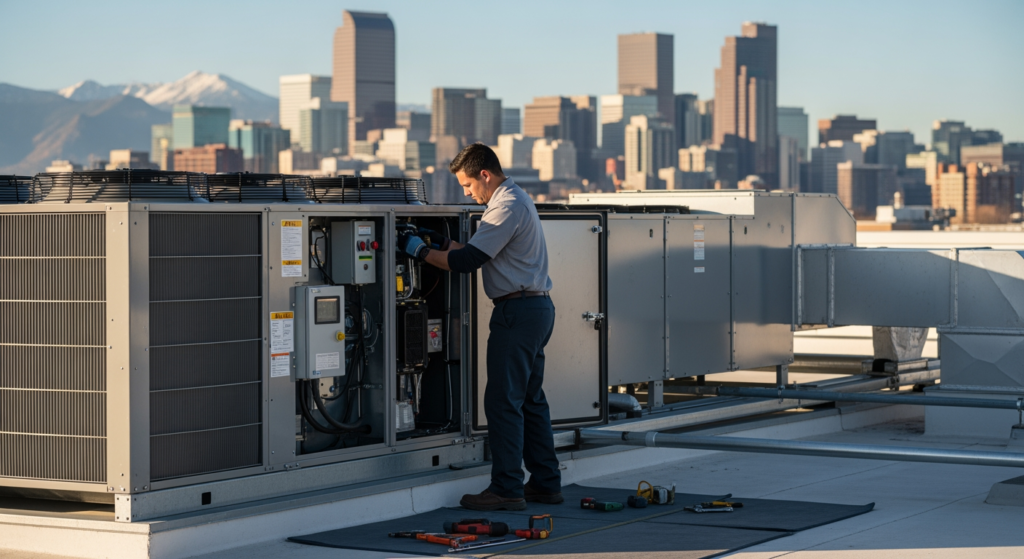
When you search for commercial HVAC services Denver CO, you’re looking for more than a quick fix—you want predictable comfort, lower operating costs, and systems that keep your tenants or customers happy year-round. That’s why I always point building owners to reliable energy data when planning upgrades; the U.S. Energy Information Administration has clear state-level info that helps set realistic goals for savings and efficiency at scale (EIA).
Why commercial HVAC matters in Denver
Denver’s climate swings—from hot, dry summers to cold, windy winters—can push rooftop units, boilers, chillers, and refrigeration systems harder than many other cities. For property managers in LoDo, Cherry Creek, RiNo, and beyond, HVAC performance drives tenant comfort, energy bills, and even lease renewals. In older downtown buildings, aging equipment often works harder than it should, increasing repair calls and unplanned downtime.
Good commercial HVAC services in Denver not only fix problems; they prevent them. That means scheduled maintenance, smart controls, and targeted upgrades that reduce peak loads and operate reliably during heat waves or cold snaps. For restaurants, grocery stores, and medical facilities, proper refrigeration and precise temperature control are mission-critical—failures cost inventory, reputation, and revenue.
Top trends affecting commercial HVAC in the city
Two big trends are reshaping the local commercial HVAC market right now. First, electrification and heat pump adoption are gaining real momentum. New commercial heat-pump technologies and variable refrigerant flow (VRF) systems allow buildings to move away from fossil fuels and lower carbon footprints. Second, smart building controls and IoT monitoring are becoming standard; real-time performance data helps teams spot inefficiencies and dispatch technicians before comfort complaints arise. Both trends influence how I advise clients on upgrades and long-term planning.
Common commercial HVAC challenges I see
Working with property teams across Denver, I’ve seen the same pain points again and again. Understanding these will help you prioritize upgrades and avoid surprises.
- Ageing equipment with high energy draw and frequent failures, especially rooftop AC units and older chillers.
- Refrigerant regulation and phase-outs that force costly retrofits for food service and cold storage.
- Indoor air quality concerns in high-occupancy spaces—ventilation needs have shifted since the pandemic.
- Skyrocketing summer loads that reveal inadequate insulation and undersized equipment.
Commercial HVAC services every Denver property should expect
A solid contractor delivers more than reactive repairs. Look for a partner who offers a full suite of services tailored to commercial needs—installation, refrigeration, controls, maintenance, and emergency response.
System design and installation
Whether you’re replacing a rooftop unit or installing a new VRF system, proper design matters. I recommend starting with a load calculation that accounts for local solar gain, insulation levels, and occupancy patterns. Design should include right-sized equipment and consideration for future electrification or controls upgrades.
Preventative maintenance and tune-ups
Preventative care is the single best way to reduce emergency repairs. Regular inspections, coil cleaning, filter management, and refrigerant checks keep systems efficient and extend equipment life. A robust PM plan prevents costly surprises during the hottest or coldest months.
Commercial refrigeration and food-service support
Restaurants, grocery stores, and institutional kitchens need steady refrigeration. Look for technicians trained in commercial refrigeration who can handle compressors, condensers, and defrost cycles quickly. Rapid response reduces product loss and keeps health inspections on track.
Controls, BMS, and energy management
Modern controls allow you to optimize runtime, manage zones, and stage equipment to reduce peak demand. Integration with a building management system (BMS) or cloud-based EMS gives visibility and analytics that translate into real savings.
Retrofits and energy upgrades
Upgrading to high-efficiency motors, variable-speed drives, or modern heat-pump systems can yield strong ROI. I always run a cost-benefit estimate showing estimated energy savings, maintenance impacts, and expected payback to support informed decisions.
Compliance and refrigerant transition
Regulatory changes around refrigerants mean many facilities must plan for conversions. Contractors who understand refrigerant rules, permitting, and phased rollouts save building owners time and money.
How to choose the right commercial HVAC contractor
Picking a contractor can feel overwhelming. I use a simple checklist to evaluate vendors, and I recommend you do the same. Prioritize experience, transparency, and local knowledge.
- Ask for commercial references in Denver neighborhoods or similar building types and check response times for emergencies.
- Verify certifications for commercial refrigeration, controls, and any specialized systems like VRF or heat pumps.
- Request a clear maintenance plan with pricing options and SLA (response time) guarantees.
- Confirm the contractor can obtain permits and handle code compliance with local inspectors.
Seasonal maintenance checklist for Denver properties
Keeping a seasonal rhythm prevents most failures. Here’s a concise checklist I recommend for property teams heading into each season.
- Spring: Clean coils and drains, inspect compressors, and test cooling capacity before high-demand days arrive.
- Summer: Monitor refrigerant levels weekly, verify fan operations, and ensure emergency response is ready during heat waves.
- Fall: Test heating sequences, inspect burners or heat-pump reversing valves, and replace filters before winter operations.
- Winter: Check defrost cycles, verify heating output under load, and secure any rooftop access or safety equipment for technicians.
Practical steps to reduce operating costs now
Upgrades don’t always mean big capital outlays. Here are practical, often low-cost steps that deliver measurable savings and improve comfort quickly.
- Install demand-controlled ventilation in meeting rooms and lobbies to match fresh-air intake to occupancy.
- Convert legacy pneumatic controls to digital thermostats with scheduling and setback capabilities.
- Seal and insulate duct leaks, especially in older buildings where rooftop plenums lose conditioned air to the attic or service spaces.
- Shift heavy loads outside peak demand windows where feasible, and stagger equipment starts to avoid demand spikes.
ROI and incentives for commercial HVAC upgrades
When I create upgrade proposals, I model three things: energy savings, maintenance savings, and any available incentives. In many cases, utility and state incentive programs help offset upfront costs for high-efficiency equipment or electrification projects. Even without incentives, measures like variable-speed drives or modern heat pumps can show paybacks in a few years through lower utility bills and reduced downtime.
Another factor to consider is building resilience. For retail and food-service tenants, uninterrupted temperature control protects inventory and revenue—so the value of reliability can justify faster investments than energy savings alone.
Emergency response and minimizing downtime
Emergencies happen. A rapid, competent response is the difference between a brief service call and a multi-day outage. Here are steps to minimize downtime when a failure occurs:
1) Maintain an up-to-date equipment inventory and serial numbers so technicians arrive prepared. 2) Keep critical spare parts on hand for rooftop units and refrigeration compressors commonly used in your building. 3) Use remote monitoring to detect anomalies early—pressure drift, unusual power draw, and temp trends often signal trouble before systems fail. 4) Have a documented escalation plan for tenant notification and inventory protection in food businesses.
How I approach a Denver commercial HVAC project
My approach balances short-term reliability with long-term efficiency. I start with a walkthrough and data review: energy bills, equipment age, recent service records, and tenant patterns. From there, I prioritize actions into three buckets—critical repairs, high-return upgrades, and long-term modernization. That way, you can budget logically and avoid large, surprise expenditures. For example, replacing an old rooftop unit may be split into an immediate HVAC swap plus a phased controls modernization to spread costs while capturing early savings.
Frequently asked questions
How often should commercial equipment be inspected?
Most commercial systems benefit from quarterly inspections, with more frequent checks during peak seasons. High-use refrigeration systems often require monthly checks to avoid costly product loss.
Can older systems be retrofitted to modern controls?
Yes. Many legacy systems can be retrofitted with digital thermostats, variable-speed drives, and remote monitoring without a full system replacement. These retrofits often pay for themselves through immediate efficiency gains.
What’s the best strategy for buildings with mixed heating and cooling fuel types?
Begin by focusing on controls integration. Unified control strategies allow mixed systems to operate efficiently together. Over time, plan for staged electrification if your goal is lower carbon emissions and reduced fossil-fuel reliance.
Are there quick wins for improving indoor air quality?
Simple, effective steps include upgrading filters to MERV 13 where equipment and IAQ needs allow, ensuring proper ventilation rates, and adding UV-C or bipolar ionization only after assessing proper installation and safety. Consulting a qualified contractor ensures solutions match your building’s needs.
Wrapping up and next steps
If you manage a property in Denver—whether it’s an office in Capitol Hill, a retail space in Cherry Creek, or a restaurant in RiNo—taking a proactive approach to commercial HVAC services pays off in comfort, reliability, and lower operating costs. Start with a clear inventory and a seasonal maintenance plan, then prioritize upgrades that reduce energy and preserve tenant satisfaction. Monitor systems with controls that give you real-time insights, and plan for phased electrification where it makes economic sense.
When you’re ready to get a practical plan and a transparent proposal, reach out to Nextech North America for Denver commercial HVAC and refrigeration solutions tailored to this area’s needs.