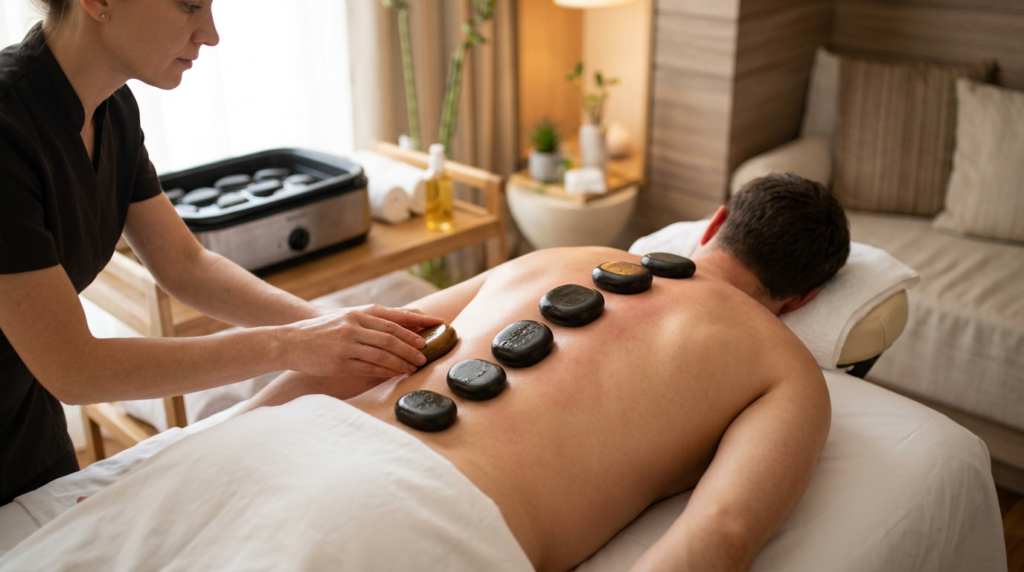
Quick answer: A hot stone blend massage combines warmed stones with hands-on massage to relax tight muscles, improve circulation, and calm the nervous system. The heat helps tissues soften faster, so the therapist can work more comfortably at a moderate pressure instead of forcing deep strokes. Most sessions focus on common tension areas like the back, shoulders, neck, hips, and feet, with temperature and pressure adjusted to your comfort.
What “Hot Stone Blend” Usually Means
A hot stone blend massage mixes two tools in one session: smooth, heated stones for steady warmth and traditional massage techniques for targeted muscle work. The stones may be placed on areas that hold tension (like the upper back or along the spine) and also used as an extension of the therapist’s hands to glide and compress muscles.
If you’re searching for hot stone blend Lexington KY, the “blend” part is the key detail. You’re not getting stones only; you’re getting a combination of heat plus focused massage strokes. That’s helpful for people who want real muscle relief but don’t enjoy very deep pressure.
Typical blend options you might see (these are general examples, not a promise of any one provider’s format) include: a 60-minute session with roughly 10–15 minutes of stone placement to warm the back and shoulders, then hands-on work for the remainder; stones used only for the back and legs while the neck and arms are done by hand; or a “heat-forward” blend where stones are used intermittently throughout to keep tissues warm while pressure stays moderate.
Who It Helps and When to Skip It
Hot stone blend sessions tend to work well for stress-related tension, stiffness from desk work, and muscles that feel “guarded” and hard to loosen. Heat can make the first 10–15 minutes feel like your body is finally letting go, which often makes shoulder and low-back work more comfortable. Many people also like it in colder months or when they feel run down and want a deeply calming session.
This is general safety guidance, not medical advice. Skip hot stones or ask for a modified approach if you’re sensitive to heat, have sunburn or irritated skin, or you’re dealing with swelling, inflammation, or a fresh injury. If you have conditions that affect sensation or circulation (for example, neuropathy or certain vascular issues), ask your healthcare provider first and tell your therapist so they can keep the temperature conservative or avoid stones entirely.
When to avoid a hot stone blend and seek medical advice first: fever or active infection; a new or worsening acute injury (recent sprain/strain, significant swelling, or unexplained sharp pain); uncontrolled diabetes or known neuropathy with reduced heat sensation; a history of blood clots or unexplained calf swelling; or any skin condition that flares with heat.
Pregnancy isn’t an automatic “no,” but it does call for careful positioning and temperature choices. A therapist may recommend a prenatal-style session without stones, or only gentle warmth in select areas.
What to Expect During and After the Session
During the massage, the heat should feel comfortably warm, not sharp or “too hot to relax into.” If you notice stinging, numbness, or a burning sensation, speak up right away. A good rule is that you should be able to take a slow breath and let your muscles soften; if you’re bracing, the temperature or pressure needs adjusting.
Afterward, it’s normal to feel very relaxed, a little sleepy, or mildly sore in worked areas—similar to how you might feel after a deep stretch. Drink water, keep your day light if you can, and notice how your range of motion feels over the next 24 hours. If you’re trying to address a recurring issue (like tight traps or low-back tension), scheduling a few sessions close together—often within a few weeks—can be more effective than spacing them far apart.
Is it right for you? A quick self-check: your main goal is relaxation or easing chronic tightness (not treating a brand-new injury); you generally tolerate heat well in showers/heating pads; you prefer moderate pressure with a “melt” feeling rather than intense deep-tissue work; and you don’t have any recent injuries, numbness/tingling, or medical issues that make heat risky.
How to Choose the Right Hot Stone Blend in Lexington
Ask how the therapist controls stone temperature (a professional warmer, frequent checks, and a clear plan for sensitive clients). Also ask how they blend the session: some people want more hands-on work with occasional stones, while others prefer longer heat placement with lighter massage. Mention any medications, skin sensitivities, or recent injuries so the plan fits your body that day.
If your main goal is muscle relief, describe the specific activities that trigger tightness (computer work, long drives, lifting, running) and where you feel it. If your goal is stress relief, say what helps you relax—quiet, firmer compressions, slower pace—so the session feels restorative instead of rushed.
In Kentucky, you can take one practical step before booking: confirm your massage therapist is licensed through the Kentucky Board of Licensure for Massage Therapy, then ask three screening questions—“How do you set and check stone temperature?”, “What’s your typical blend split between stones and hands-on work, and can you customize it?”, and “What should I tell you about injuries or health concerns so we can keep heat and pressure safe?” Corey Proffitt Studios Massage